Since its invention in Pennsylvania in 1870, abrasive blasting has made its way in industrial manufacturing as a method of choice for surface preparation and finishing. There are now countless ways to blast a surface due to the variety of abrasive materials.
As people realized that sandblasting had significant safety issues, grit blasting became the preferred abrasive method. In today’s industrial environments, grit blasting is often chosen because it is low cost and effective when cleaning several types of large surfaces, including metals, plastics, and ceramics.
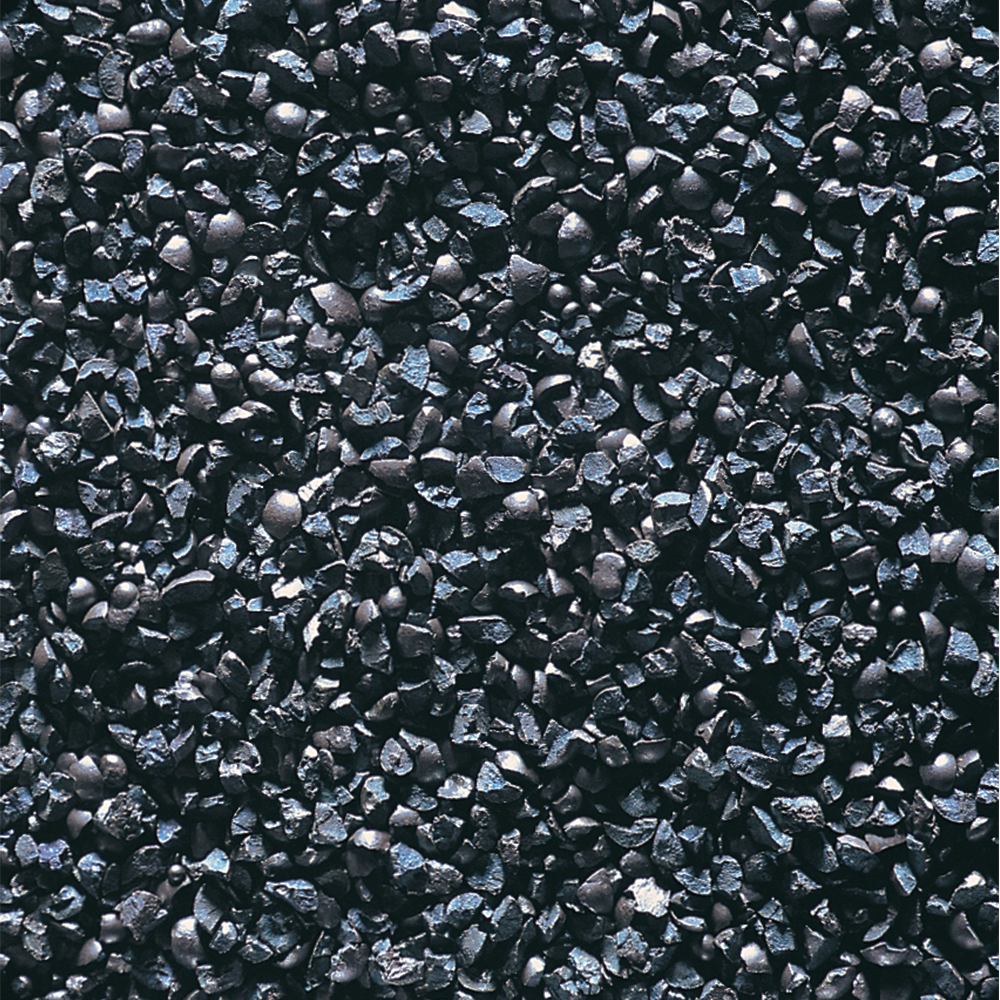
Strictly speaking, grit blasting is the process of using grits to blast a surface. Grits are hard materials that have an angular shape. They are used to remove surface contaminants, strip paints and coats, and roughen surfaces. The most common types of grits are made of aluminum oxide or steel.
The difference between grit blasting, abrasive blasting, and sand blasting can be confusing. That’s because the terms are used interchangeably.
Grit blasting is often used as a synonym for abrasive blasting to describe any process that shoots abrasive media at high speed—not just grits. Sandblasting is also used as a synonym for grit blasting, but they are technically not the same. As the name suggests, sandblasting is the process of using silica sand to blast a surface.
There are limitless possibilities when it comes to choosing abrasive materials for blasting, and most of them are not grits. Examples include minerals (silica sand, garnet sand), organic materials (walnut shells, corn cobs), metals (steel grits, stainless steel shots), and synthetic materials (baking soda, dry ice, aluminum oxide, silicon carbide, glass beads).
Generally, harder abrasives are used to process surfaces more efficiently while softer ones are used to avoid damaging the surface.
How Does Grit Blasting Work?
With grit blasting, a blasting nozzle is used to propel grits at high velocity toward the surface to be treated.
Compressed air is the most common method used for propulsion, but other blasting processes exist. Wet abrasive blasting uses liquids under high pressure (such as water) to help trap dust and lubricate the surface. Vapor streams and spinning wheels (wheel blasting) can also be used.
When grits impact the surface, abrasion removes contaminants, coatings, corrosion, and other surface imperfections. Depending on the type of grit, it’s also possible to roughen the surface, creating more surface area to improve adhesion for paints, coats, or adhesives.
The variety of blasting methods offers a wide range of surface finishes. Bead blasting, for example, can create a smooth surface finish and remove burrs on machined parts. Other processes can create a matte finish. Shot peening can harden surfaces to improve durability and longevity.
Compressed Air Blasting
Wheel Blasting
Wet Abrasive Blasting
Is Grit Blasting Dangerous?
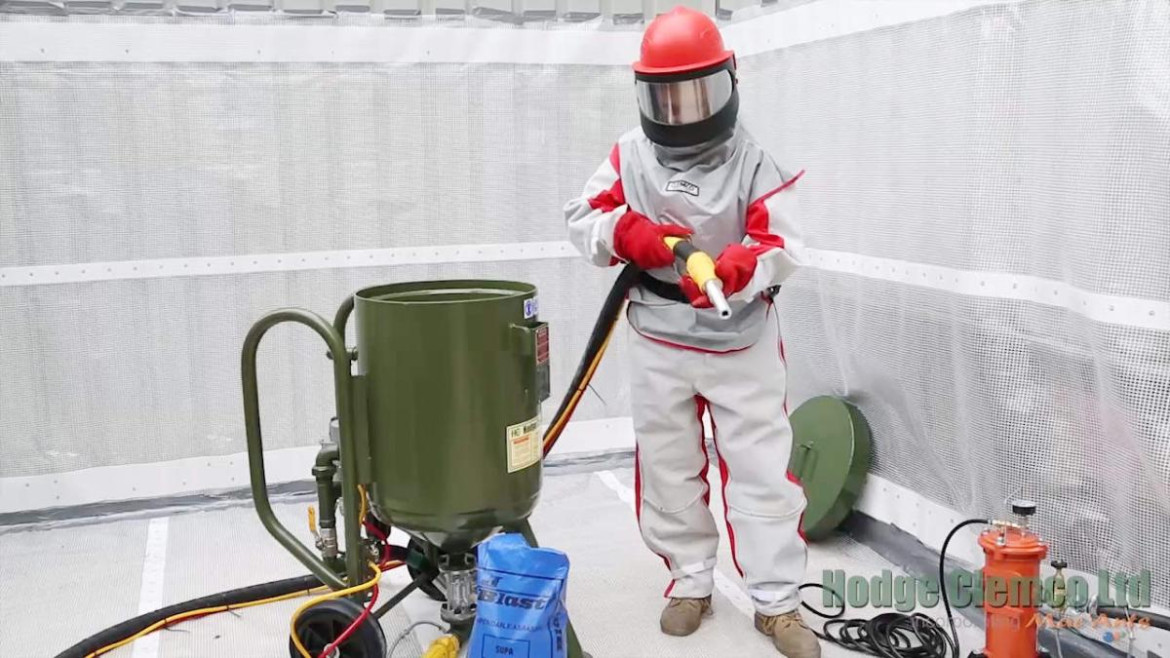
An operator wearing protective equipment in a blast cabinet. Image courtesy of HodgeClemco.
Grit blasting can cause serious health issues, such as respiratory diseases, hearing loss, and physical injuries. It is crucial to wear personal protective equipment, follow safety procedures, and implement safety measures like dust control. Dust, debris, and waste materials are also damaging for the environment and need to be managed properly.
The most serious safety issues arise from the large amounts of dust generated during the process. The dust originates from abrasive particles, surface contaminants, old paint, and the substrate. This makes airborne particles very dangerous for breathing. Workers who inhale abrasive dusts are exposed to serious health issues, such as silicosis, an incurable lung disease that can lead to disability and death.
PPE is needed to protect workers from dust and other hazards, such as the noise generated by the blasting equipment and the abrasive projectiles. An abrasive blasting respirator must cover the worker’s head, neck, and shoulders. Other PPE includes hearing protection, eye and face protection, a helmet, gloves, and safety boots. All PPE should be inspected daily to ensure they are not broken or worn down.
The blasting operation needs to be contained to protect other workers. This can be done by performing the operation in blast rooms or blast cabinets, by using barriers and curtain walls, or by creating a restricted area if the operation is not enclosed. An exhaust ventilation system is also needed to capture dust generated by the process.
Here is an example of an abrasive blast room for an industrial environment.
If you need guidance to manage safety, you can use the OSHA’s factsheet on how to protect workers from abrasive media blasting.
How Consistent is Grit Blasting?
Due to its abrasive nature, grit blasting can lead to part deformation, inconsistent results, and surface contamination. To prevent quality issues, it’s important to maintain the equipment, replace degraded grits, mask sensitive areas on parts, and clean up dust residues.
Here is an overview of what you need to know about inconsistencies that can occur:
Blast cleaning leaves residual dust that needs to be removed to get a clean surface, which is often needed for subsequent operations.
The process cannot be used to remove all types of surface contaminants. Grease and oil need to be removed before blasting.
The operating life of blast machines and blasting equipment is relatively low due to the abrasive nature of the process. Equipment that is worn down can hinder the quality and consistency of the process.
The substrate (especially if it’s a soft material like aluminum) can be damaged by the blasting material, causing defects such as microcracks.
Blasting is unprecise and hard to control. It cannot be used to treat specific areas.
Over time the blasting media degrade, resulting in texturing quality variations.
Manual masking is often needed to protect certain areas from blasting. This process is slow, prone to error, and costly.
What Are the Alternative Solutions?
Grit blasting systems come with important downsides. The dust byproduct is a nightmare to manage, surfaces can get damaged, and manual masking to protect other areas is tedious.
While most manufacturers are used to managing these downsides, others are turning to alternatives. Let’s look at what solutions are available to address these issues.
Laser Texturing
Laser texturing can drastically improve how surface preparation is performed on metal surfaces—especially when precision is needed or when processing a large number of parts. Laser texturing can modify the surface texture as needed and remove all types of contaminants at the same time. You can learn more about laser texturing here.
Dry Ice Blasting
Dry ice blasting is the non-abrasive version of grit blasting. The process uses dry ice pellets for a much softer touch. It also does not leave blasting residues behind, with CO2 gas venting into the atmosphere instead. You can learn more about dry ice blasting here.
Discover How Laser Texturing Compares to Grit Blasting
Laser texturing is a good solution if you need to treat localized areas on a part, automate your process, prevent damage on your substrate, eliminate dust problems, or process a large volume of parts.
If you think you could benefit from laser texturing, contact our laser experts today. They will review your application and tell you if it is a good option for you.
With a PhD in Laser Processing, Alex is one of the two laser experts who founded Laserax. He is now Vice President and Chief Technology Officer, overseeing the team that develops laser processes for laser marking, cleaning, texturing, and welding applications.
Wafer cleanliness can determine the success of every process that follows. Laser wafer cleaning offers a precise, non-contact method for removing targeted contaminants while minimizing mechanical stress on the wafer. A laser can scan the entire surface across a wafer or target specific areas.
Laser cleaning is an eco-friendly process used to remove rust, paint, oxide and other contaminants from metal surfaces. Because of its efficiency, it is being used in an increasing number of applications.
The e-coating process, also known as electrocoating, is a highly reliable method for protecting metal parts against corrosion, UV exposure and wear. By understanding how e-coating works and how to optimize it, you can ensure optimal throughput, reduce defects, and achieve high-quality coatings.