In the automotive and metalworking industries, traditional surface treatments like chemical etching, mechanical abrasives, and PVD are used to modify the surface properties of metals.
Nowadays, laser technology offers better ways to treat metals and meet engineering requirements with increased precision and consistency.
Laser surface treatments can be used on almost all types of metals, including carbon steel, cast iron, aluminum, molybdenum, and magnesium. They can remove contaminants and coatings (laser cleaning), modify the surface roughness (laser texturing), harden surfaces (laser hardening), and add materials to surfaces to improve surface properties (laser cladding).
Laser cleaning is a surface treatment that can remove coatings as well as a wide range of contaminants from metals.
Oxides: Aluminum, copper, stainless steel oxides are quickly removed. Mill scale takes more time to remove and is typically not a good fit.
Coatings: Powder coating, e-coating, metal coating, phosphate coating, and insulating coating can be removed. Clear coats and thick coatings are more challenging to remove.
Contaminants: All types of contaminants can be removed. Common ones include electrolytes, lubricants, oil, grease, and dust.
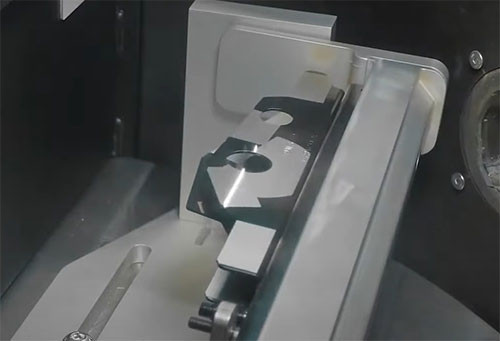
Selective laser cleaning of e-coating.
Laser Texturing of Metals
Laser texturing, also known as laser structuring, is a complete surface treatment for metal parts. It cleans, textures, and modifies the chemical composition of the surface in a single operation.
Cleaning: Removes coatings and surface contaminants, increasing the surface free energy.
Texturing: Etches the surface to create a texture and roughness that facilitates mechanical interlocking.
Chemical Changes: Introduces a controlled quantity of beneficial oxides to create more bonding sites.
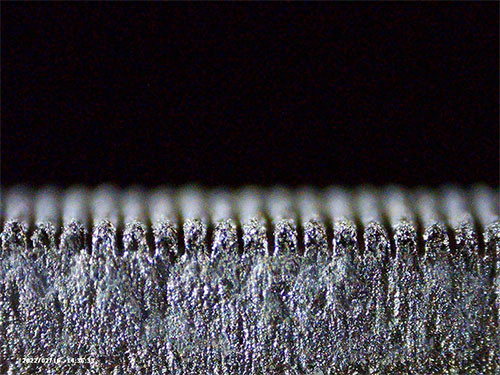
A linear pattern etched into the surface of a metal part.
Laser texturing can be used to prepare metals for any type of coat, seal, or adhesive. For example, some of our customers use it to prepare metals for thermal spray coating and adhesive bonding.
Laser Hardening of Metals
Laser hardening, also known as laser heat treatment, is a surface treatment used to improve the mechanical properties of metal components, such as hardness, wear resistance, and fatigue strength.
The laser beam is directed on the surface of the workpiece, which rapidly heats up the surface layer of the metal. This causes it to quickly melt and cool down.
This rapid heating and cooling alters the microstructure of the metal, resulting in a hardened surface layer with improved mechanical properties.
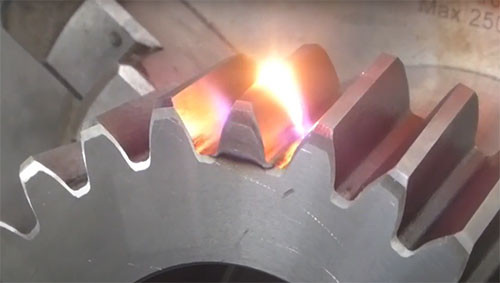
A steel gear being hardened in localized areas to improve resistance to wear (source)
Laser Cladding of Metals
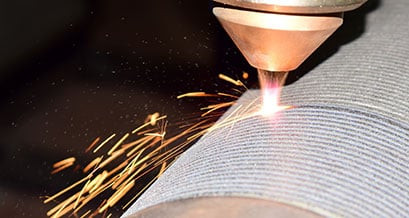
Laser cladding is like the 3D printing of metal with a laser. It is a material deposition process used to add thick or thin layers of material on a surface to improve its properties or repair damaged areas.
A laser beam is used to melt a powder or a wire, depositing layers that can improve corrosion resistance, wear resistance, and more.
A steel gear being hardened in localized areas to improve resistance to wear (source)
9 Examples of Metal Surface Treatments with Lasers
1. Laser Texturing Ni-Plated Steel Batteries
Adhesives are increasingly used in EV battery packs to reduce weight, improve the load-bearing strength, and optimize thermal management. Laser texturing is used on battery cells and housings to improve the strength of adhesive bonds.
2. Laser Texturing Aluminum Turbos
Thermal spray coating is used on turbine housings to improve properties like heat resistance, wear resistance, and corrosion protection. Laser texturing before thermal spray coating creates the ideal microstructure on the surface of the housing to ensure strong bonding properties.
3. Laser Cleaning Aluminum Housings
Sealants are used to achieve the high IP rating needed in e-motors. Before the sealant is applied, laser cleaning removes oxides and contaminants to ensure a high-quality bond between the sealant and the aluminum surface.
4. Laser Stripping Powder Coating from Copper Hairpins
In e-motors, hairpin windings are covered with an epoxy resin to insulate them within the stator. Laser cleaning is used to expose the bare copper before welding to ensure that the epoxy does not penetrate the welds.
5. Laser Stripping E-Coating from Steel Seat Brackets
Laser cleaning is used to remove the e-coat from areas used for assembly on seat brackets. It exposes the bare steel to ensure that the e-coat does not diminish adhesion during assembly. The process shown in the video perfectly demonstrates the selective capabilities of laser cleaning.
6. Laser Oxide Removal from Copper Slip Rings
Laser cleaning is used to remove copper oxides that form on slip rings. This improves the electrical conductivity between slip rings and brushes to optimize the performance of the electric motor.
7. Laser Cleaning Electrolyte from Ni-Plated Steel
Liquid electrolyte can end up on critical components of cell casings, causing issues like short circuits and corrosion. Laser cleaning is used to remove electrolyte, liquid or dried, as well as other contaminants on the surface of battery cells.
8. Laser Hardening Steel Spacer
Laser hardening can be used to harden selective areas on steel, making it more durable.
9. Laser Cladding Steel Guide Rings
Laser cladding can be used to repair steel surfaces by depositing new material.
Conclusion
Laser cleaning and texturing have the potential to improve the precision, speed, and repeatability of metal surface treatments—all while reducing operating costs significantly. If you are interested in discussing a cleaning or texturing application with a laser expert, contact us today.
Catherine holds a bachelor’s degree in Engineering Physics and a master's degree in Physics. She completed her master’s in partnership with Laserax to develop industrial solutions for the laser texturing of metallic surfaces. She is now the Applications Lab Supervisor at Laserax, where she oversees the team that tests and optimizes laser processes for clients.
Wafer cleanliness can determine the success of every process that follows. Laser wafer cleaning offers a precise, non-contact method for removing targeted contaminants while minimizing mechanical stress on the wafer. A laser can scan the entire surface across a wafer or target specific areas.
Laser cleaning is an eco-friendly process used to remove rust, paint, oxide and other contaminants from metal surfaces. Because of its efficiency, it is being used in an increasing number of applications.
The e-coating process, also known as electrocoating, is a highly reliable method for protecting metal parts against corrosion, UV exposure and wear. By understanding how e-coating works and how to optimize it, you can ensure optimal throughput, reduce defects, and achieve high-quality coatings.