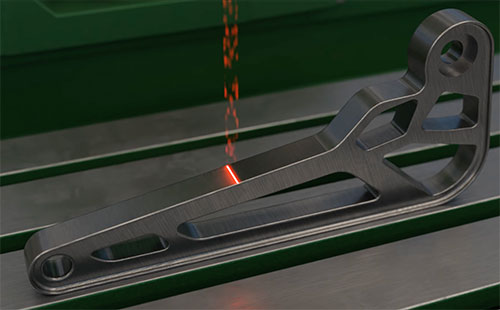
Although steel is a strong metal, altering its microstructure with a surface treatment can be necessary to improve hardness and wear resistance.
In other cases, surfaces must be cleaned to remove oxides, textured to improve adhesion, or coated for protection. Yet, processes that improve one property can introduce new risks. Surface distortion. Hydrogen embrittlement. Poor adhesion. Reduced fatigue performance.
Understanding how each method works and its pros and cons is key to choosing the right process for your application.
In this article, we go over the most common surface treatment methods for coatings and depositions, surface preparation, and surface modification.
Electroplating remains one of the most common methods for treating steel, depositing metal coatings such as zinc, nickel, or chrome on its surface.
In this process, the substrate is immersed in a solution with dissolved metal ions. As the negative electrode, the substrate attracts the positively charged metal ions, which are reduced and adhere to the surface.
Pros
Cons
Provides uniform, controllable coating thickness
Uses hazardous chemicals requiring disposal and compliance
Improves corrosion resistance and appearance
Limited coating thickness compared to thermal processes
Wide range of coating materials (zinc, nickel, chrome, etc.)
Adhesion can be weaker than metallurgically bonded coatings
Suitable for complex geometries
Risk of hydrogen embrittlement in high-strength steels
Relatively low processing temperatures
Multiple pre-treatment and post-treatment steps required
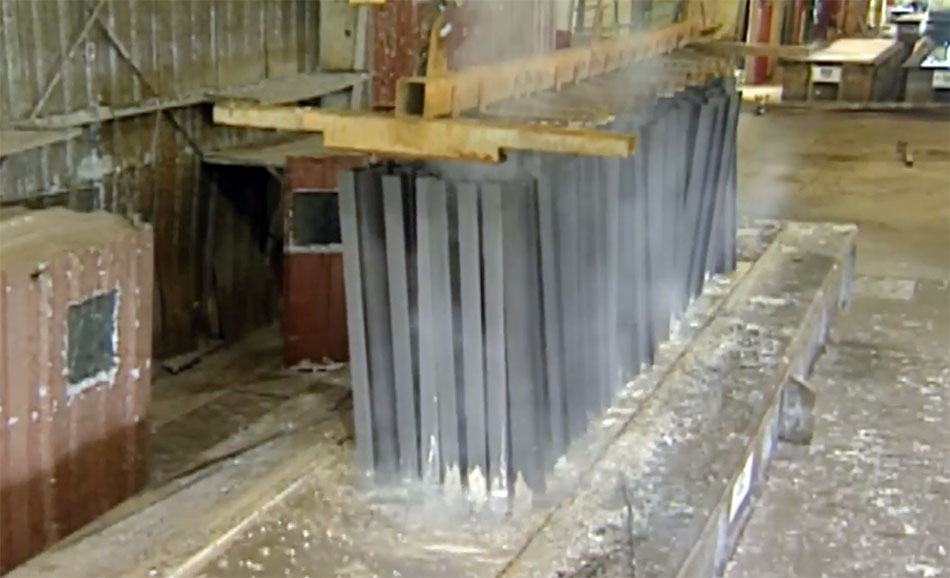
With hot dipping, steel is immersed in a molten bath, typically zinc, to form a metal-bonded alloy coating. While immersed, the iron in the steel reacts with the zinc, forming a series of layers of iron-zinc alloys and an outer layer that is pure zinc.
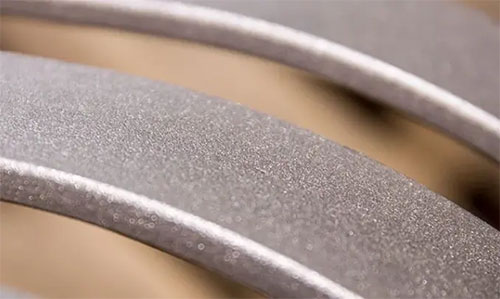
This is a dry finishing process. Finely ground resin and pigment particles are electrostatically charged and sprayed onto a surface. Curing occurs in a heated oven, where the powder melts and fuses into a coating.
Lasers are often used to clean or texture the surface before powder coating.
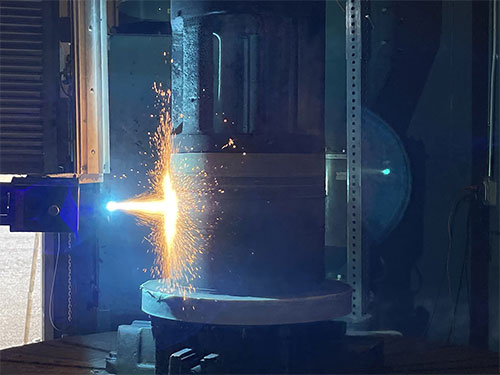
In thermal spraying, molten or semi-molten materials are sprayed onto the steel surface at high velocity. This might include metals, ceramics, or plastics. The material is heated by a flame, electric arc, or plasma, then sprayed onto the substrate, where it solidifies to form a protective coating with minimal heat distortion to the substrate.
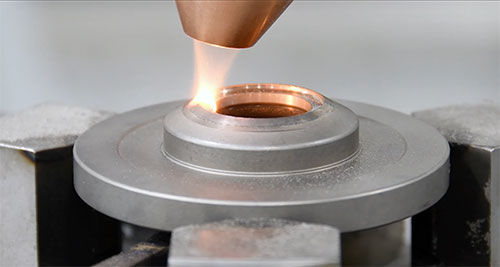
Laser cladding is an advanced coating process in which a high-power laser melts a coating material and fuses it directly to the steel substrate. The coating, typically delivered as a powder or wire, is precisely melted to deposit alloy layers with controlled thickness and composition. Because the coating melts into the surface to create a metallurgical bond, it creates minimal dilution of the base material.
Pros
Cons
Metallurgical bond to substrate
Higher initial equipment cost
Low dilution (5–10%) of base material
Slower deposition rates than thermal spray
Precise control of deposit location
Requires skilled process control
High-quality, dense coatings
Limited coating width per pass
Excellent wear and corrosion resistance
Not ideal for very large-area coverage
Surface Preparations
Laser Cleaning
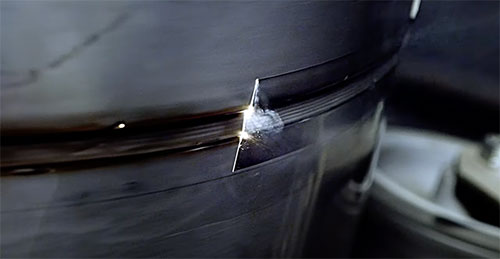
Unlike many other processes, lasers are non-contact, eliminating the need for chemicals, abrasive media, or other consumables. Lasers vaporize contaminants like oxides, rust, paint, or coatings from steel without affecting the underlying substrate. Because lasers are precise, you reduce the need for masking and can create specific patterns.
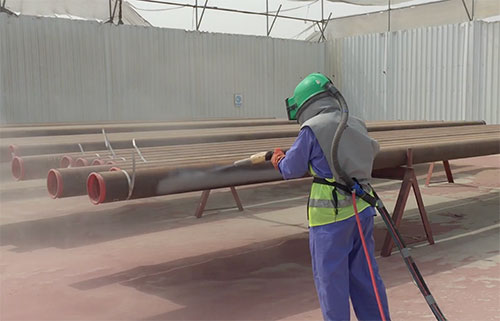
Sandblasting uses abrasive media such as sand, grit, or glass beads, which are fired at high velocity against the steel surface to remove contaminants or coatings. This is typically used before further treatment occurs.
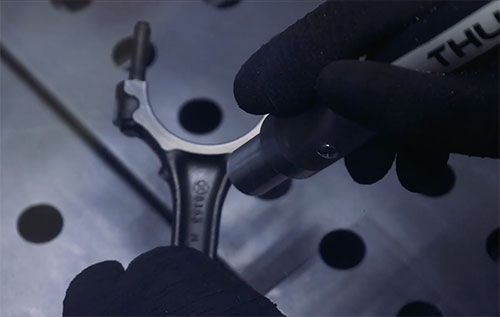
Shot peening uses spherical metal shots to bombard the surface, creating compressive residual stresses that improve fatigue resistance and prevent cracks from forming.
Pros
Cons
Improves fatigue life
Does not remove heavy contamination
Induces compressive residual stresses
Surface finish becomes rougher
Enhances crack resistance
Limited control of micro-scale texture
Widely proven technology
Requires media handling
Suitable for critical components
No corrosion protection
Surface Modifications
Chemical Coatings
This is a conversion process where steel reacts chemically to form a thin protective layer. Chemical coatings include:
Phosphating: A crystalline zinc or manganese phosphate coating that improves corrosion resistance and paint adhesion.
Passivation: Removes free iron from stainless steel surfaces and forms a passive chromium oxide layer that enhances corrosion resistance.
Black oxide: Produces a magnetite (Fe₃O₄) layer that provides a dark finish with minimal dimensional change and light corrosion protection.
Chromate conversion: Forming a chromium-based layer that offers excellent corrosion resistance and serves as a primer for subsequent coatings.
Pros
Cons
Low-temperature processing
Thin coatings offer limited wear resistance
Improves corrosion resistance
Uses hazardous chemicals
Enhances paint adhesion
Waste treatment required
Uniform coverage
Shorter lifespan than thick coatings
Low dimensional change
Not suitable for high-abrasion environments
Laser Texturing
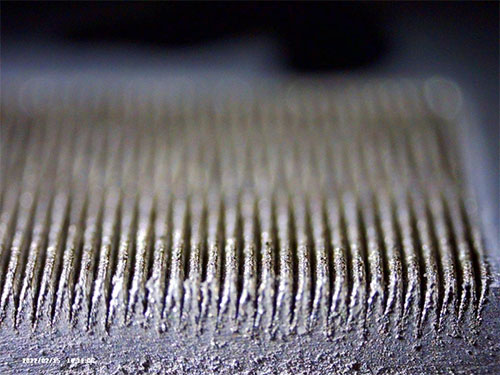
Controlled laser pulses add roughness to create better adhesion. You can ablate material in precise patterns and form beneficial (passive) oxides at the same time to significantly increase mechanical bonding. Laser texturing is also frequently used before thermal spraying or powder coating.
This process creates hardening with minimal distortion. A high-powered laser rapidly heats the steel surface above its transformation temperature and then allows it to self-quench as heat dissipates. Because you can precisely target areas, you can localize hardening without thermal distortion to the component. For example, hardening the cutting area on a pair of pliers without impacting the rest of it.
Pros
Cons
Localized hardening
Limited hardened depth
Minimal distortion
High capital cost
No quenching media required
Line-of-sight only
High precision
Not ideal for very large surfaces
Improves wear resistance
Requires alloy-compatible steel
Comparing Surface Treatment Methods for Steel
As you can see, each method has its pros and cons. This chart helps compare each of these methods for corrosion resistance, wear resistance, coating thickness, and environmental impact.
Process
Corrosion Resistance
Wear Resistance
Coating Thickness
Environmental Impact
Electroplating
High
Medium
Thin
High
Hot-Dip Glavanizing
Very High
Medium
Thick
Medium
Powder Coating
High
Medium
Medium
Low
Thermal Spraying
High
High
Thick
Medium
Laser Cladding
Very High
Very High
Medium
Low
Laser Cleaning
None
None
None
Low
Sandblasting
None
None
None
High
Shot Peening
None
Medium
None
Medium
Chemical Coatings
Medium
Low
Thin
High
Laser Texturing
Low
Low
None
Very Low
Laser Surface Hardening
Low
Very High
None
Low
Why More Manufacturers Are Choosing Lasers for Steel Treatment
Precision, efficiency, and environmental compliance are just some of the reasons that modern manufacturers are moving to lasers for steel treatment. You get a clean, controlled approach to steel surface modification with consistent results every time. No consumables. No abrasive media. No labour-intensive masking.
Lasers provide:
Precision control: Lasers can target specific areas with micron-level accuracy without affecting the surrounding material.
Flexibility: A single laser system can clean, texture, harden, or clad surfaces without changing equipment or setups to reduce changeover cycles.
Automation-ready: Lasers can integrate seamlessly with robotics and CNC controls, making them ideal for high-volume production that demands consistency.
Reduced distortion: Concentrated energy and rapid processing minimize heat-affected zones, resulting in little to no thermal distortion compared to traditional heat-treatment methods.
The initial capital investment for laser equipment is typically higher than for traditional methods, but it produces significant ROI, especially for high-volume manufacturers or when working with high-value components.
If you’re considering a laser for your surface treatment, get in touch to discuss with one of our experts.
Catherine holds a bachelor’s degree in Engineering Physics and a master's degree in Physics. She completed her master’s in partnership with Laserax to develop industrial solutions for the laser texturing of metallic surfaces. She is now the Applications Lab Supervisor at Laserax, where she oversees the team that tests and optimizes laser processes for clients.
Modern catheter systems are becoming smaller, more complex, and more specialized for procedures ranging from cardiovascular interventions to neurovascular treatments. At the same time, these devices must meet extremely strict manufacturing and regulatory requirements.
Laser marking is everywhere—from serial numbers on automotive parts to logos on electronics and traceability codes on medical devices. But not all lasers are created equal, and selecting the right type depends on your material and marking requirements.
With their unmatched ability to process materials with high precision and minimal thermal damage, Ultraviolet (UV) lasers have become essential tools across industries as diverse as microelectronics, medical devices, automobiles, and even consumer goods packaging.