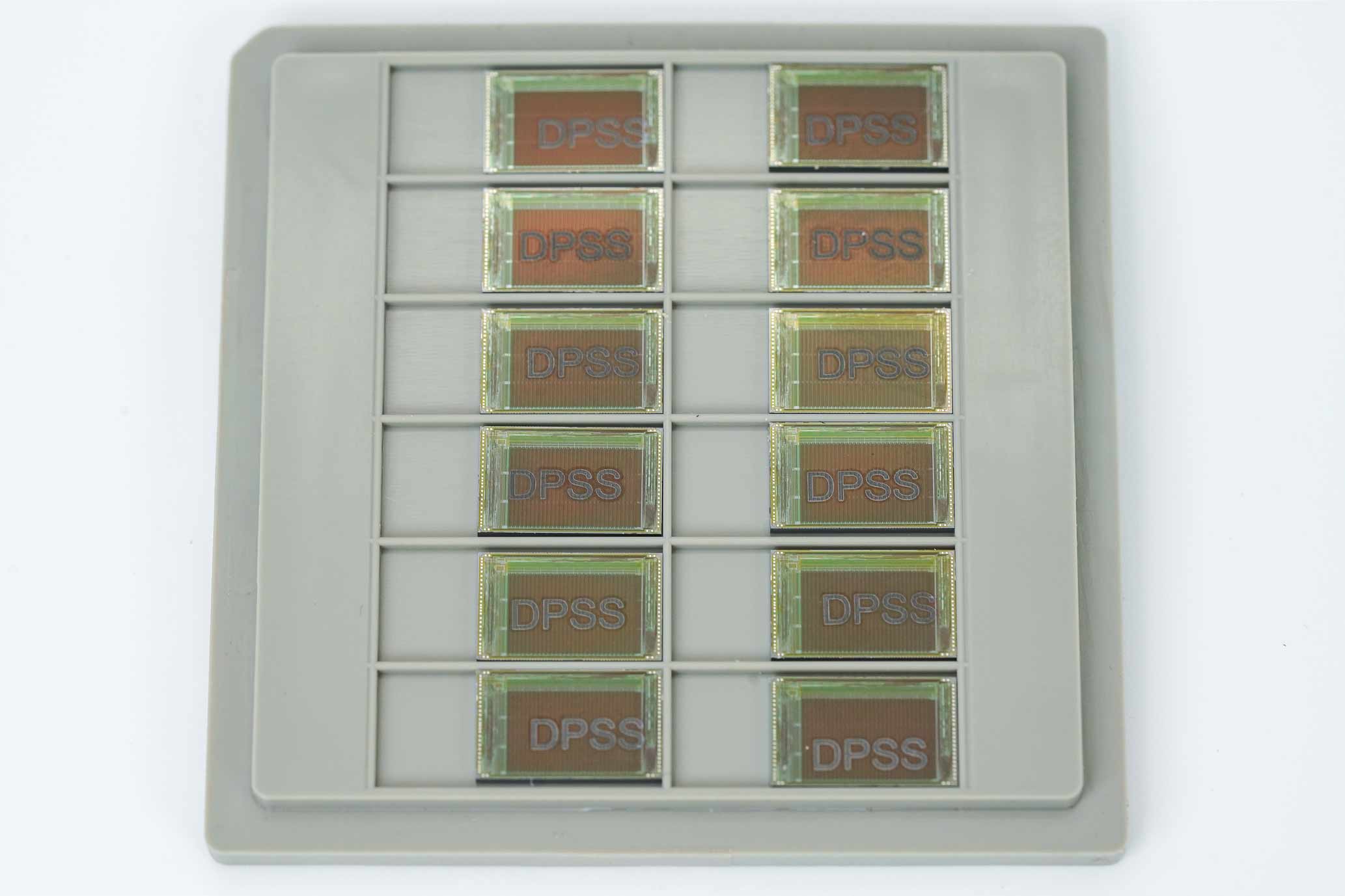
Semiconductor manufacturing requires incredible precision. In an industry where one micron is considered large, even minor process deviations can compromise yield or performance.
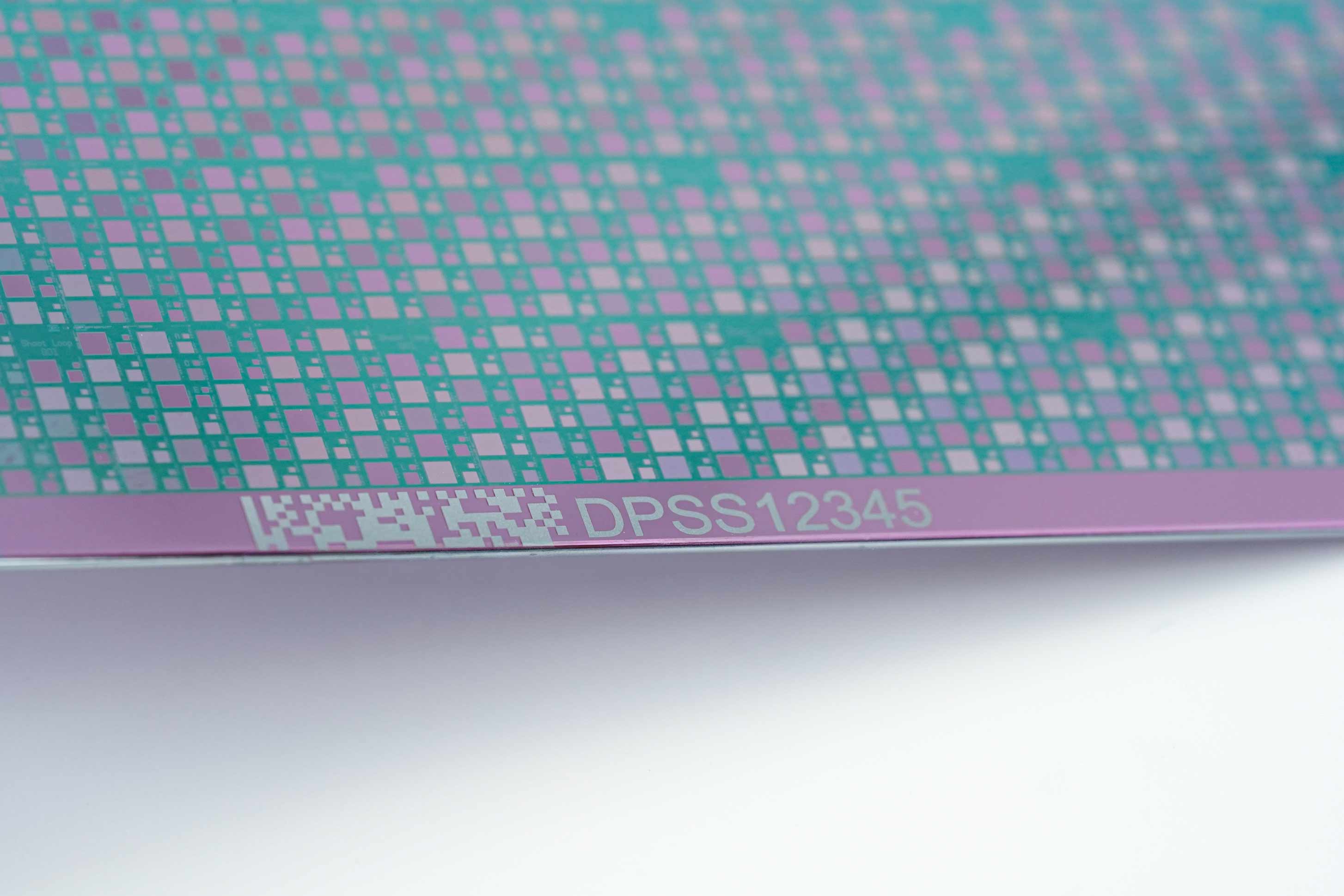
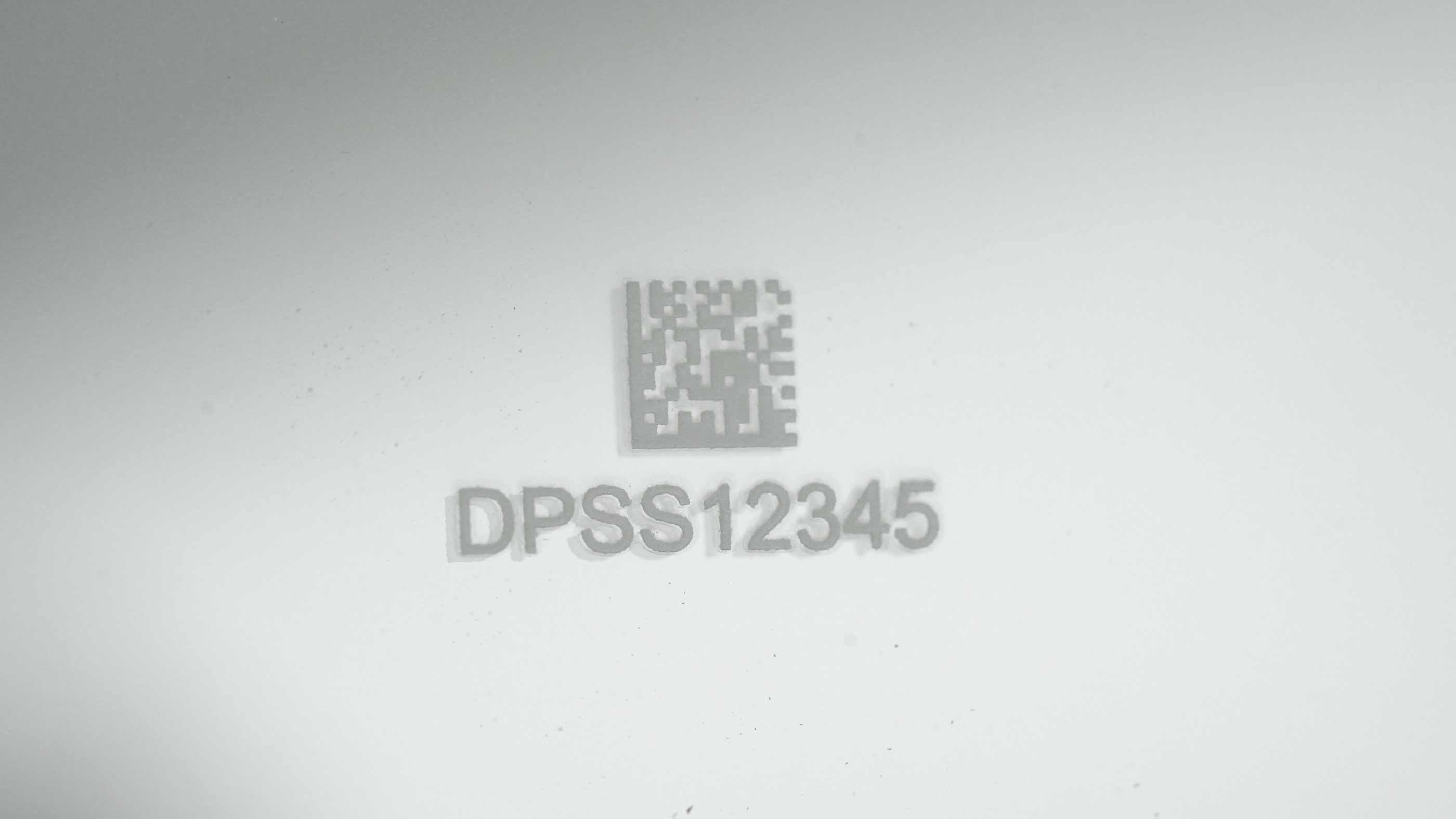
Yet, within these tight parameters, you still need permanent identification marks for traceability that are readable by automated vision systems and precisely positioned.
And, these marks must be added in a way that doesn’t introduce contamination or produce thermal damage.
Laser wafer marking is often the best solution, offering non-contact processing with high repeatability and integration into automated workflows.
Semiconductor identification is typically achieved using one of two core laser marking methods:
Debris-free (soft marking)
Ablation marking
Debris-Free (Soft Marking)
One of the most widely used approaches in advanced semiconductor fabs is debris-free soft marking. Instead of removing material, the laser energy is carefully controlled to deform the wafer surface, creating a micro-dimple that can be as small as 0.1 microns (100 nanometers) deep without creating any loose particles.
These marks resemble tightly-spaced golf-ball dimples. To the naked eye, they may be nearly invisible under normal lighting conditions. However, machine vision systems using angled or structured illumination can read them accurately.
This makes soft marking ideal when wafers have already passed cleaning stages and must proceed directly to coating, deposition, or lithography without any post-mark cleaning steps.
Because no ablation occurs, contamination risk is effectively eliminated. The trade-off is that it may be difficult for humans to read these marks, as they are optimized for automated inspection rather than manual identification.
Ablation Marking
Ablation marking removes material from the wafer surface to create a deeper, more visible mark. Depending on the laser parameters and your material properties, ablation depths can range from tens to hundreds of microns. Because the marks made are high-contrast to the human eye, they are easier to read than soft marks.
However, ablation generates some debris during processing. Air assist, fume extraction, and vacuum systems can reduce particle contamination, but ablation typically requires a post-mark cleaning of semiconductors.
For this reason, ablation is often used earlier in the process flow or by wafer suppliers who know customers plan to clean the wafers prior to final fabrication.
Ablation also becomes a throughput consideration when you are marking at scale. While marking a single wafer identifier may take only milliseconds, marking hundreds or thousands of die-level barcodes across a wafer can significantly increase cycle time.
In these cases, higher power & pulse energy may be required, but you must be careful not to introduce excessive heat, which can impact wafer properties.
Selecting the Right Marking Method
Choosing between debris-free soft marking and ablation is not a cosmetic decision. It is driven by a combination of:
Material behaviour
Contamination tolerance
Traceability requirements
Production flow
Key considerations include whether post-mark cleaning is permitted, how much contrast is required for downstream vision systems, and whether identification is applied at the wafer level or the individual die level.
While both approaches can be optimized for low heat input, soft marking inherently minimizes thermal load. Ablation requires more precise pulse control to avoid creating unintended heat-affected zones.
Because each situation is unique, it’s best to talk to an expert before choosing a method.
Matching the Laser Source to Wafer Material
For most wafer marking applications, ultraviolet (UV) nanosecond lasers are the preferred choice. The short wavelength enables a smaller spot size, delivering high-resolution marks with accurate edge definition.
More importantly, UV lasers can do cold marking, where material interaction occurs with minimal heat diffusion into surrounding areas.
Picosecond and femtosecond lasers can further reduce thermal effects, but they do cost significantly more. As a result, they are rarely justified for marking alone. These ultrafast sources become more attractive when marking is combined with other laser-based processes, such as precision drilling or micromachining, where superior edge quality and minimal heat input are essential.
CO₂ lasers are generally avoided in wafer marking due to their higher thermal impact.
Material-Specific Behavior
When engineers talk about wafer marking, they’re generally talking about silicon wafers unless they specify a different type of material.
Silicon Wafers
Silicon is the most common substrate used in semiconductor manufacturing and supports both debris-free soft marking and ablation.
Glass Wafers
Glass wafers behave differently. Soft dimpling doesn’t work reliably, and surface ablation can create tiny cracks or chips. Instead, tightly focused laser beams are often used to create subsurface micro-inclusions, placing the mark within the mid-plane of the glass to preserve surface integrity.
Ceramic and Silicon Carbide
Depending on composition, ceramics or silicon carbide may support color-change or annealing marks without ablation, or they may require shallow material removal.
Each of these materials is especially heat sensitive, increasing the need to minimize thermal load.
Other Types of Wafers
Gallium nitride, gallium arsenide, quartz, and fused silica require tailored wavelength and pulse-duration to achieve readable marks without and with ablation damage.
Engineering Challenges Beyond the Laser
Contrary to what you might think, the laser itself is rarely the limiting factor in wafer marking. Today, lasers can easily achieve exceptionally small spot sizes. However, the real challenge is in positioning that spot with micron-level accuracy across the entire wafer.
Wafer Placement
Semiconductor specifications routinely demand tight tolerances of ±2 microns or better. Meeting these requirements requires 100’s of nanometer-class XY and Z motion stages, often mounted on granite bases or thermally-isolated frames to minimize vibration and drift.
The system must maintain this accuracy beyond just a single point, but across 200 mm or 300 mm wafers.
Robotic wafer handlers can typically place wafers with an accuracy of five to ten microns, which is many times not good enough for precise marking. An integrated vision system is needed to locate wafer edges or fiducials, calculate any needed offsets, and dynamically correct the location before the laser fires.
After marking, the vision system must re-measure and validate dynamically.
If the mark falls outside tolerances, the wafer is flagged or rejected, and the system can automatically compensate for the detected offset on subsequent wafers. Continuous recalibration is essential because even a temperature change of 0.1 °C can shift alignment by several microns and push marks out of compliance.
Scaling for Larger and Thinner Wafers
As wafer diameters increase, so do engineering challenges. Larger wafers amplify flatness, bending, and height control challenges. With thin wafters, you also have to worry about bowing, creating curvature or warping.
This requires precise Z-axis correction, even if the laser depth of focus tolerates height variations. While the laser focus itself may tolerate some height variation, the integrated system must compensate to ensure repeatable results across the entire surface.
Marking Within the Semiconductor Fabrication Process
Depending on the process, marking may be applied either in the early stages or in the late stages of production.
Early-Stage Traceability
In most semiconductor fabs, wafer identification is applied early in the process before coatings, metallization, or structures are added. This approach ensures traceability from raw substrate through every stage of fabrication.
Therefore, the mark must be able to survive downstream processing without degrading or contaminating the wafer.
Late-Stage Product Identification
In other cases, marking occurs later in the process to identify finished wafers, coated substrates, or individual components.
These applications are typically less demanding, as the mark is applied to an existing surface layer rather than the base substrate. In these scenarios, wafer marking becomes more similar to general laser marking processes, except with cleanroom capabilities.
Questions Fab Managers Should Ask When Evaluating Marking Systems
In evaluating a wafer marking solution, you must assess the quality of the laser itself & optical configuration, as well as the stability and precision of the integrated system. Key questions to ask include:
What is the achievable placement accuracy, and is it maintained over a full wafer?
Does the system provide real-time vision feedback for alignment and correction?
How is temperature drift controlled and monitored?
Can the system handle thin or bowed wafers with active Z-height feedback?
What laser wavelengths and pulse durations are supported for multi-material fabs?
How does the system handle debris management for ablation marks?
What is the throughput when marking single wafers or die-level identifiers?
Perhaps most importantly, buyers should evaluate the integrator’s experience. Meeting sub-micron tolerances consistently is no small task, and only a limited number of system builders have proven expertise in semiconductor-grade motion control and vision integration.
Traceability With Compromise
Marking wafers in a way that enables traceability while not compromising performance or yield requires careful integration of laser solutions with low thermal impact, vision-driven robotic feedback, and flexibility to handle different materials.
Most of today’s wafers are 200-300mm; 450mm wafers are generally used for R&D. However, as wafers continue to grow large and thinner, the complexity intensifies.
You need a robust laser marking system to meet the challenge for both today’s and tomorrow’s semiconductor manufacturing needs.
Are you manufacturing wafers?
Get in touch with us to learn how our solutions can improve your manufacturing process.
Alex Laymon became President and Director of DPSS Lasers (now a Laserax company) in 1998. He previously served as the Vice President of Engineering at LiCONiX, following a series of technical positions that included Engineering Manager and Senior Laser Engineer. Mr. Laymon received his B.S. in Engineering Physics and his M.B.A. at Santa Clara University. His decades of expertise in UV lasers now contribute to Laserax's mission to shape the future of high-precision laser solutions.
Every printed circuit board that leaves a fabrication line needs to be traceable to its source. Traceability data (serial numbers, lot codes, Data Matrix symbols) must survive assembly, reflow, cleaning, coating, and years of field service, all while fitting within a marking area smaller than a grain of rice.
When precision marking is required on delicate or heat-sensitive materials, ultraviolet (UV) laser technology offers a distinct advantage.
By minimizing thermal impact, UV laser marking creates high-contrast, permanent marks while preserving material integrity and meeting demanding traceability requirements.
Walk into any Hospital and you'll see it immediately. Every single tool, implant, and device has some kind of marking on it. Serial numbers, logos, barcodes. When you're putting something inside someone's body, or even just touching their skin, you need to know exactly what it is, where it came from, and when it was made.