When precision marking is required on delicate or heat-sensitive materials, ultraviolet (UV) laser technology offers a distinct advantage.
By minimizing thermal impact, UV laser marking creates high-contrast, permanent marks while preserving material integrity and meeting demanding traceability requirements.
With evolving manufacturing processes, selecting the right marking technology has become increasingly important. This article will help you determine whether UV laser marking is right for you.
UV laser marking is a permanent marking process that uses ultraviolet (UV) laser light to create text, serial numbers, barcodes, logos, and other identifiers on the surface of a material.
What sets UV lasers apart is their 355 nm wavelength, which is significantly shorter than CO₂ (10,600 nm) or fiber (1,064 nm) lasers. This shorter wavelength is absorbed more efficiently by most materials, enabling a photochemical reaction at the surface rather than relying on heat.
The result is what's often called "cold marking": a process that produces high-contrast, permanent marks with minimal thermal impact. This matters a lot when even small amounts of heat can damage sensitive materials or affect the long-term performance of a component.
UV laser marking achieves precise, high-quality marks by minimizing heat while maximizing the material's absorption of laser energy. This process involves a combination of:
Photochemical changes that alter the material's appearance and surface properties.
Localized thermal effects that help create permanent marks without significantly affecting the surrounding area.
The photochemical component of UV laser marking occurs when a material contains compounds that can react to ultraviolet light.
A common example is titanium dioxide (TiO₂), a white pigment widely used in plastics. When exposed to UV laser energy, TiO₂ can absorb photons and trigger chemical reactions that permanently alter the material's optical properties, as the 3.49 eV photons produced by a 355 nm UV laser exceed the pigment's approximately 3.1 eV bandgap.
As a result, electrons can be excited into the conduction band, creating electron-hole pairs. These charge carriers can then participate in irreversible photochemical reactions that alter the material’s optical properties and produce a visible change in color.
The energy required to perform UV laser marking varies by material. The chemical composition, optical absorption, and atomic bonding influence how much energy must be delivered to the substrate’s surface to create a visible and permanent mark.
For example, many plastics can be marked using an energy density in the range of 0.2–1 J/cm², whereas metals often require 2–5 J/cm² or more. The difference is largely due to the stronger atomic bonding found in metals and the need for greater photochemical surface interaction.
Interestingly, the photochemical mechanism is similar to the process of developing a photograph in a darkroom. In both cases, exposure to light triggers chemical changes that immediately alter the object's appearance. With UV laser marking, these changes result in a visible mark that can appear darker or lighter depending on the material.
Common Uses for UV Laser Marking
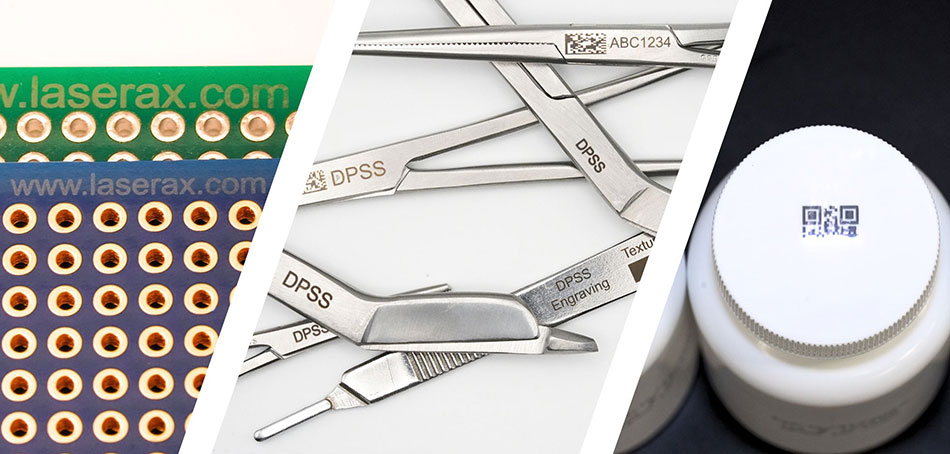
UV laser marking is most used for traceability and identification applications where permanent and easy-to-read marks are needed. Its high precision is particularly useful for marking small parts (less than half a millimetre) and when the markings need to be small but clear.
2D Codes (like Data Matrix and QR codes)
Two-dimensional codes like Data Matrix and QR codes can store large amounts of information in a very compact space. They are used in almost all industries to share data about a given part or product. Two-dimensional codes are particularly useful to ensure traceability and serialization, especially on small items where traditional barcodes might not fit.
Barcodes
Barcodes are machine-readable patterns or symbols used to encode information like key identifiers (product, shipment, and location) and key attributes (serial numbers, lot numbers, dates, etc.).
Serial Numbers
Serial numbers are identifiers assigned to products or parts to ensure traceability, quality control, maintenance, and product authentication.
Logos and Branding
These can also be permanently marked on products to help establish a strong visual identity for the brand throughout the product lifecycle.
Benefits of UV Laser Systems
High Precision and Resolution
The precise beam control of UV laser systems enables the laser to target the same location consistently from one part to the next. Meanwhile, advanced optics provide complete control over the spot size and dimensions. As a result, these systems can create highly detailed marks.
Minimal Heat-Affected Zone (HAZ)
One of the defining characteristics of UV technologies is that they generate little to no heat, which allows marking without damaging the surrounding material. There are three different laser pulse regimes that can be used depending on the amount of heat a material can tolerate: femtoseconds generate the least heat, followed by picoseconds, while nanosecond pulse duration generates a higher HAZ.
High-Contrast Marks
UV lasers can generate high-contrast marks on a vast range of materials, including plastics, glass, ceramics, and certain metals. The compatibility between the UV laser used and the material depends on the composition of the substrate.
Ability to Mark Extremely Small Features
UV lasers can achieve such a small spot size that they can mark extremely small, detailed features, even in limited spaces. These features can be as small as 7 microns, and even with identifiers or codes this small, readability is never sacrificed.
Permanent Traceability
Unlike labels or printed codes, identifiers marked with UV lasers literally become part of the material itself. This means they are not prone to detachment or wear over time. The marks used for traceability will remain readable throughout the product’s lifecycle, despite handling, cleaning, and environmental exposure.
Sustainability
For many, sustainability can be a decisive factor, and UV laser marking offers a reduced environmental impact. That’s because laser marking eliminates the need for consumables like ink or adhesive labels. As a result, it helps reduce waste, lower carbon footprints, optimize energy consumption, and support a circular economy.
Limitations of UV Lasers for Marking
Higher Initial Investment
UV laser systems generally require a higher upfront investment than alternatives. This is mainly due to the complexity of the laser source technology, the specialized optical components that are used to generate and control UV wavelengths, and the cooling requirements.
Material-Dependent Results
While UV lasers are compatible with several materials, the resulting mark quality and contrast depend on the composition of the substrate. Factors like pigments, additives, condition, and surface treatment can influence how a material responds to UV laser energy. For this reason, manufacturers often need to conduct tests in order to determine compatibility.
Slower for Some High-Volume Applications
Depending on the material and required mark depth or contrast, UV lasers may process parts more slowly than higher-power fiber laser systems. While this is not a deal breaker for several manufacturers, it can be when high speed is required.
UV vs. Fiber vs. CO₂ Laser Marking
UV, fiber, and CO₂ lasers excel in different areas, which makes the selection process more nuanced than it might seem at first glance. To choose the right laser technology for your application, several factors need to be considered. The table below highlights the key differences between UV, fiber, and CO₂ laser marking systems.
Semiconductors keep getting smaller. UV lasers are widely used in their manufacturing since precision and material integrity are critical for these items. Plus, when it comes to semiconductors, materials tend to be sensitive, and the components themselves are miniature, which makes UV lasers particularly well-suited.
Examples: Wafers, circuit boards, microchips, and semiconductor packages
Medical Device Identification
Medical device manufacturers often rely on UV laser marking to create traceability identifiers that will last permanently while preserving the integrity of the materials (which are particularly sensitive). UV laser technology is used to apply serial numbers, lot codes, Data Matrix codes, and Unique Device Identification (UDI) markings on a variety of parts. They deliver the data required for regulatory compliance. The minimal HAZ is particularly valuable when it comes to marking medical plastics and other instruments.
Examples: Catheters, instrumentation, needles, tubing, and other parts or devices
Electronic Component Manufacturing
UV laser marking is also very common in electronics manufacturing, since components are often very small and traceability is increasingly important. Once again, the fact that this technology doesn’t damage nearby circuitry or substrates is what makes it so useful in this industry.
The pharmaceutical industry operates under very strict regulations to ensure market compliance and, more importantly, patient safety. UV laser marking is particularly valuable when it comes to applying durable identification and traceability information to packaging. By marking an identifier that is reliable and will not wear over time (unlike ink-based methods), manufacturers enable tracking of medicines from manufacturing to end users.
Examples: pill bottles, capsules, chipboards, labels, cartons, and all types of packaging
Aerospace and Defence Labelling
When it comes to aerospace and defence labelling applications, it’s important to create marks that resist extreme conditions and can remain readable in the long term. Like several of the industries mentioned above, this one relies heavily on traceability and durability; UV lasers provide both.
Examples: PCB-FR4, packaging, turbine components, fasteners, pumps, and instrumentation
Automotive
UV laser marking also has applications across a growing range of automotive components. Manufacturers can rely on this technology to apply permanent identifiers, traceability codes, and branding on electronic and non-electronic parts.
Examples: Any electronics, chipboard, PCB, sensors, and more
Considerations When Purchasing a UV Laser Marking Machine
Material Compatibility
Before implementing a UV laser marking solution at full scale, you should perform tests to make sure that a material is compatible with the technology. The quality and appearance of a mark depend entirely on the substrate's composition and the UV laser used.
Required Mark Size and Resolution
Early in the selection process, you should determine the size and level of detail the marks should have. UV lasers can support both small, high-resolution markings and larger applications, since they can range from 35 mm to 1 meter, depending on the optics and system configuration.
Production Speed Requirements
Production throughout is another important aspect you should consider. The selected UV laser system should be able to keep pace with the desired number of parts per minute while also making sure the marks are consistent and high-quality.
Features Needed
What features does your application require? UV laser systems can be equipped with a variety of options, including 2D or 3D scan heads, small or large fields of view, autofocus capabilities, integrated vision systems, code verification, and code reading.
Power Output and Wattage Requirements
To determine the required wattage, you need to evaluate factors such as the material, the marking speed, energy consumption, and the type of mark being produced. UV laser systems are available in a range of power levels, typically from 1 W to 100 W.
Beam Quality and Spot Size
Because beam quality and spot size directly affect the precision and resolution of the marking, you need to establish your requirements. Depending on the system configuration, spot sizes can range from 7 µm to 250 µm.
Integration and Automation Compatibility
It’s also possible to integrate UV laser systems into automated production environments. Many UV laser solutions can come with vision systems, robotics, rotary stations, and conveyor systems.
Software and User Interface
UV laser systems are often compatible with custom human-machine interface (HMI) platforms. They can also be configured to communicate with broader control systems, which can really help your system operation.
UV Laser Solutions
As we’ve seen throughout this guide, selecting the right UV laser system begins with understanding the specific application itself. UV laser marking is used in several industries, each with its own constraints and marking objectives. To help manufacturers address their varying marking needs, Laserax offers several solutions designed for different production environments and requirements.
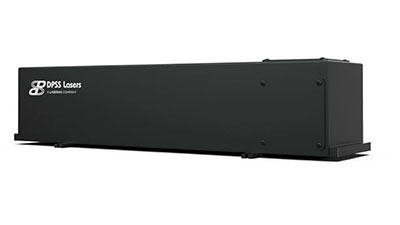
Linear UV Laser Marking System
Laserax’s Linear UV Laser System combines the precision and minimal impact of UV laser marking with the speed required for high-volume manufacturing. It’s highly versatile, as it can be tailored to your specific applications, materials, and power or speed requirements. Plus, its marking-on-the-fly capability enables permanent markings on plastics, glass, metals, ceramics, PCBs. It’s ideal for traceability and identification in the medical, electronics, and aerospace industries.
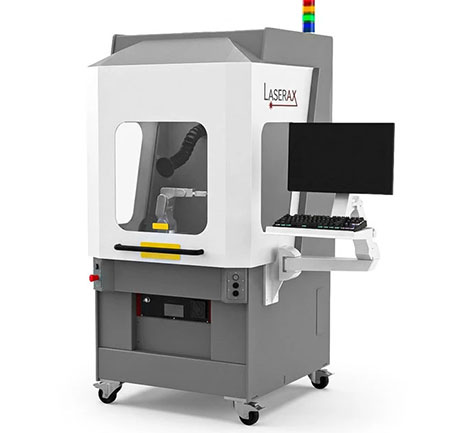
PrecisionFLEX Laser Workstation
The PrecisionFLEX Workstation is a production-ready UV laser solution designed for industrial applications that require high accuracy and repeatability. It combines a UV laser with high-resolution scanning optics and a precision robot part handler. The PrecisionFLEX is very flexible and is particularly well-suited for industries like medical devices, electronics, aerospace, and advanced manufacturing.
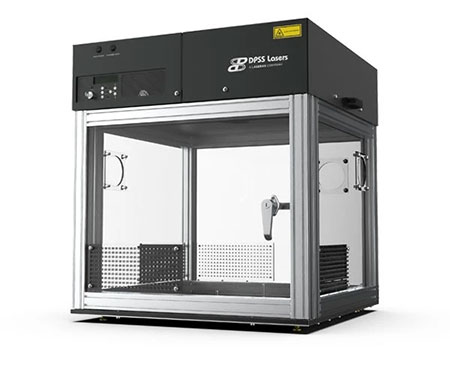
Class 1 UV Laser Marking Machine
Laserax’s Class 1 UV Laser Marking Machine is a ready-to-use system that delivers fast, precise marking on delicate and heat-sensitive materials. It’s housed in a fully enclosed, FDA-compliant Class 1 safety enclosure with a large front door for easy access. Plus, a 360-degree view of the work area and easy-to-use software streamline the whole marking process. This solution can be deployed with minimal safety requirements while delivering high-quality, permanent marks on materials like plastics, ceramics, glass, wires, and fiber.
Conclusion
When chosen and implemented appropriately, UV laser systems offer a unique combination of precision and versatility.
The most important point to remember is that there’s no one-size-fits-all solution for laser marking. The right UV laser system will always depend on the material, the desired result, the production objectives, and the specific needs of the application.
In this day and age, when efficiency, traceability, sustainability, and quality are increasingly important, UV laser marking can be a strategic investment in long-term performance and flexibility. And our team can support you in this process so you can make the best investment possible.
Are you considering a UV laser marking system?
Whether you’re evaluating UV technology for the first time or looking to optimize an existing system, we can help. Get in touch with us so we can find the best solution for your application.
As a business development manager, John has extensive experience and expertise in laser solutions across several industries, including medical, food & beverage, packaging, semiconductor, industrial automation, and aerospace.
Every printed circuit board that leaves a fabrication line needs to be traceable to its source. Traceability data (serial numbers, lot codes, Data Matrix symbols) must survive assembly, reflow, cleaning, coating, and years of field service, all while fitting within a marking area smaller than a grain of rice.
Semiconductor manufacturing requires incredible precision. In an industry where one micron is considered large, even minor process deviations can compromise yield or performance. Laser wafer marking is often the best solution, offering non-contact processing with high repeatability and integration into automated workflows.
Walk into any Hospital and you'll see it immediately. Every single tool, implant, and device has some kind of marking on it. Serial numbers, logos, barcodes. When you're putting something inside someone's body, or even just touching their skin, you need to know exactly what it is, where it came from, and when it was made.

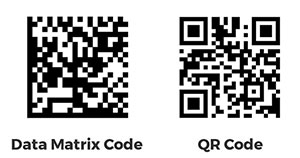 Two-dimensional codes like Data Matrix and QR codes can store large amounts of information in a very compact space. They are used in almost all industries to share data about a given part or product. Two-dimensional codes are particularly useful to ensure traceability and serialization, especially on small items where traditional barcodes might not fit.
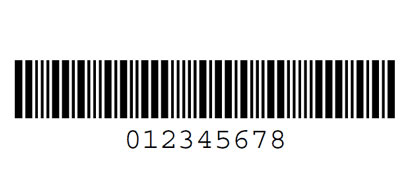 Barcodes are machine-readable patterns or symbols used to encode information like key identifiers (product, shipment, and location) and key attributes (serial numbers, lot numbers, dates, etc.).